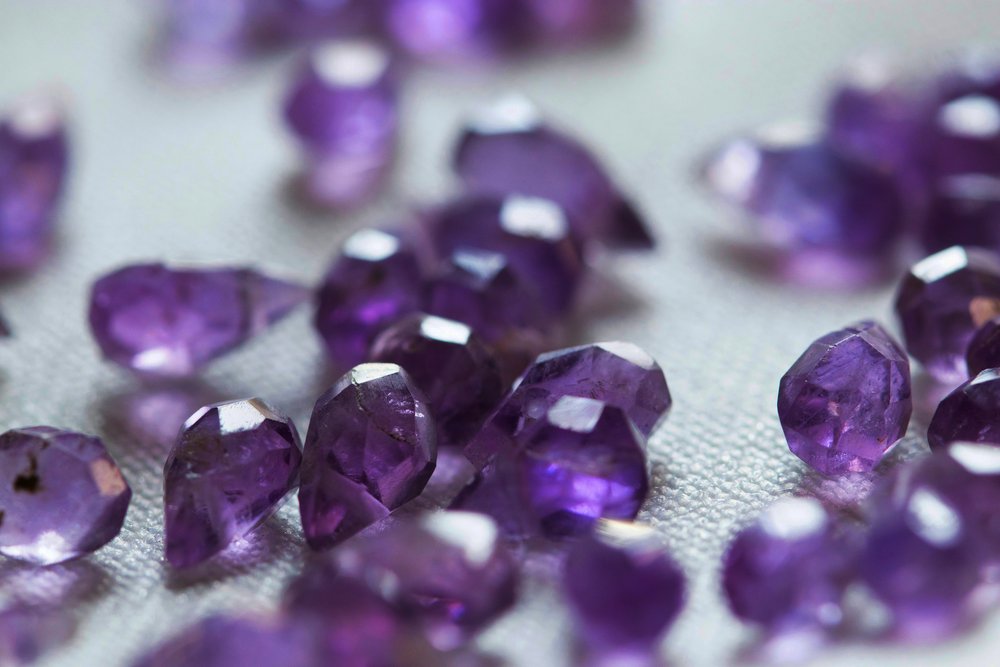
Description
Natural amethyst, a variety of quartz, is celebrated for its vibrant purple color, which can range from light lavender to deep violet. With a hardness of 7 on the Mohs scale, amethyst is durable and suitable for various types of jewelry, including rings, necklaces, and earrings. Often associated with tranquility and balance, amethyst has a strong presence in both the fashion and fine jewelry markets. Its affordability and widespread availability have made it a popular choice among consumers and collectors alike. Understanding its properties, sources, and market dynamics is essential for anyone involved in its trade or collection.


Physical Properties and Specifications
-
Chemical Composition: SiO₂ (silicon dioxide)
-
Hardness: 7 on the Mohs scale
-
Crystal System: Hexagonal
-
Refractive Index: 1.544 – 1.553
-
Specific Gravity: 2.65
-
Pleochroism: Absent
-
Fluorescence: Generally inert
-
Cleavage/Fracture: Conchoidal fracture
Color and Quality Classifications
Available Color Ranges
-
Primary hues: Purple
-
Secondary modifications: Light lavender, mauve, and violet
-
Tone and saturation ranges: Light to dark tones with vivid saturation
-
Premium colors: Deep violet and rich purple
-
Commercial grades: Light shades and less saturated colors
Clarity Characteristics
-
Typical inclusion types: Liquid inclusions, gas bubbles, and color zoning
-
Clarity grading standards: Eye-clean to included
-
Source-specific features: Unique inclusions that may indicate origin
-
Eye-clean criteria: No visible inclusions to the naked eye
Source Locations and Material
Historic sources
-
Brazil, Uruguay, and Egypt
Current production
-
Significant production is currently from Brazil, Uruguay, and Madagascar.
Source-specific characteristics
-
Each location imparts distinct characteristics in color and clarity.
Production trends
-
Increasing demand for amethyst has led to rising prices, especially for high-quality specimens.